


Horizontal Machining Centers
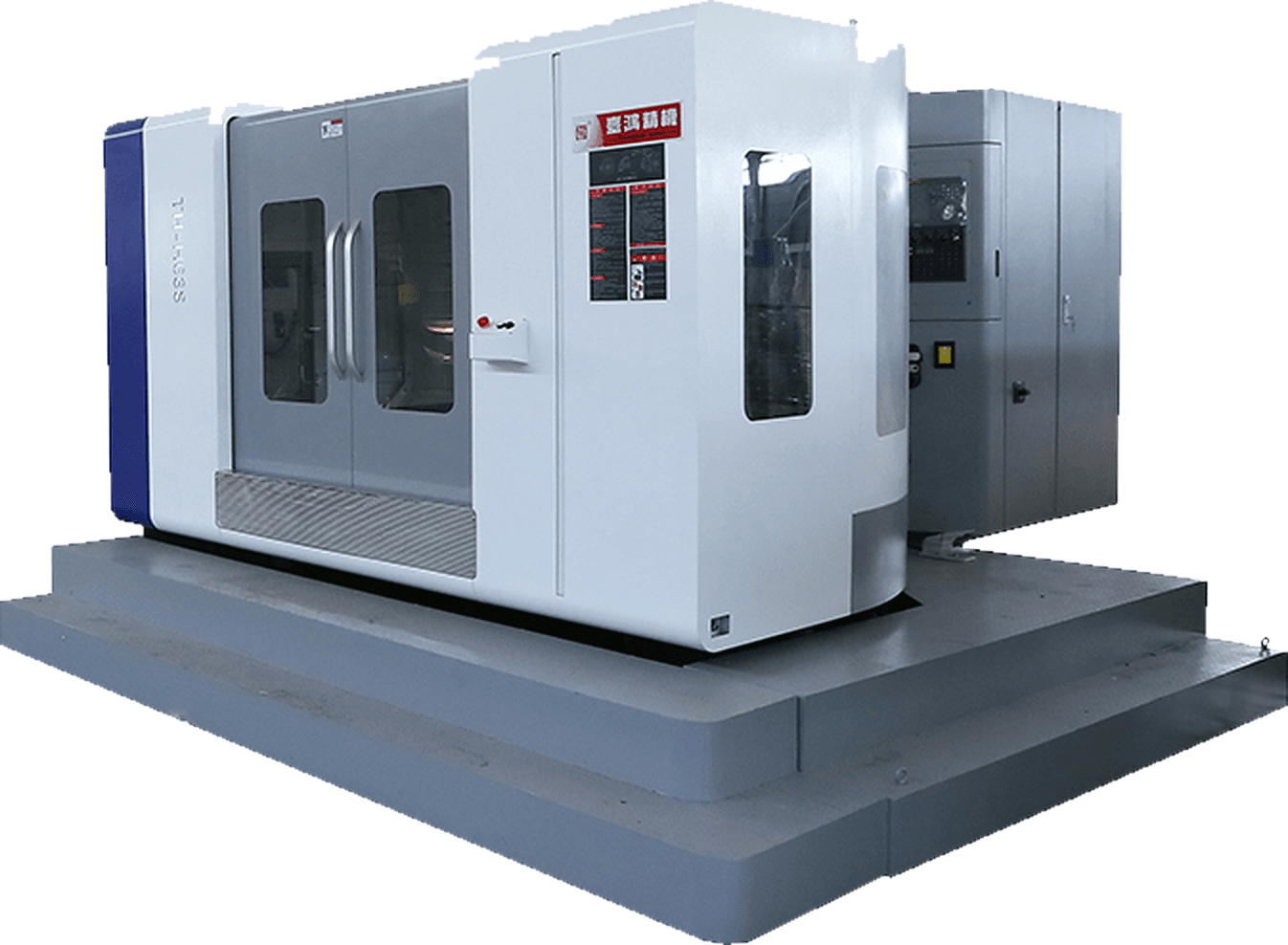
Twin pallets and an inverted-T structure — a stable answer for batch housing work.
2 models:Twin pallets and an inverted-T structure — a stable answer for batch housing work.
Fits
Housings, valve bodies, pump casings and gearboxes; four-face batch work.
Avoid
One-offs and frequent changeovers; parts beyond the pallet load.
Decide first
Fix pallet size and travel first, then twin pallets and tool capacity.
2 models, one structural logic.
The table carries X and Z motion while the headstock moves in Y. Resin-sand castings receive a second ageing pass after rough machining; servos drive ball screws directly. Suited to multi-face batch machining of housings.
Housings, valve bodies, pump casings and gearbox shells that need four-face work and stable batches are a natural fit for horizontal machining. The H500S takes a 500 mm pallet and the H63S a 630 mm pallet; size the pallet and travels to the part, then confirm twin pallets, tool capacity and chip evacuation. Horizontal machines concentrate more faces per setup but demand disciplined fixturing and tool management; for high-mix, low-volume work, evaluate changeover time carefully.
- Models
- 02
- Options
- Spindle / ATC / scales / probing

Pick a model for specs and configuration.
Within the family, travels, spindle and tool changer differ. Narrow the range in the table, then open a model for the full spec table, applications and related models.
← Swipe to compare →
* Source: Taihong product catalogue. Specifications follow the catalogue and technical agreement; options vary within the family.
Other sizes in the family(3)
← Swipe to see full specifications →
Source: Taihong product catalogue. These sizes are built to order and do not have separate pages; final data follows the technical agreement. Send a part drawing to confirm travels, spindle and tool capacity.
Settle three things before you choose.
Part size, material and tolerance set travel and spindle; volume and operations set tool capacity and automation.
What parts does the Horizontal Machining Centers range suit?
The table carries X and Z motion while the headstock moves in Y. Resin-sand castings receive a second ageing pass after rough machining; servos drive ball screws directly. Suited to multi-face batch machining of housings. Housings, valve bodies, pump casings and gearbox shells that need four-face work and stable batches are a natural fit for horizontal machining. The H500S takes a 500 mm pallet and the H63S a 630 mm pallet; size the pallet and travels to the part, then confirm twin pallets, tool capacity and chip evacuation. Horizontal machines concentrate more faces per setup but demand disciplined fixturing and tool management; for high-mix, low-volume work, evaluate changeover time carefully.
The Horizontal Machining Centers range has 2 models — how do I choose?
Start with the maximum part length, width and height to set travel, then match spindle and tool capacity to material and tolerance. The range runs from TH-H500S to TH-H63S with different travels and configurations. Leave clearance for fixturing and tool changes when the part approaches the limit, and move up one model if needed. Confirm the final selection against the drawing.
How are delivery, installation and training handled for this range?
Standard models are scheduled by configuration and quantity; delivery is confirmed in the contract. The delivery team installs and commissions the machine and trains operators on operation, programming and daily maintenance. The machine carries one year of free maintenance and lifetime technical support.
A different structure for a different part.
Vertical Machining
From 650 to 1,500 mm — the production backbone for molds and precision parts.
Drilling & Tapping
Up to 24,000 rpm and a swing-arm changer, built for small 3C parts.
Gantry Machining
From 1,600 to 4,000 mm travels for large molds and structural parts.
CNC Lathes
Efficient turning and turn-mill for small, high-accuracy rotational parts.
High-Speed Mould
24,000 rpm for mould cavities and electrodes.
Send us the part drawing.
Process first, machine second.
Share the material, envelope, tolerance and cycle time. We will specify travels, spindle, tool magazine and fixturing — then quote against the process.